2026 Monthly Habit Tracker Canva: Your Design-Driven Planning System
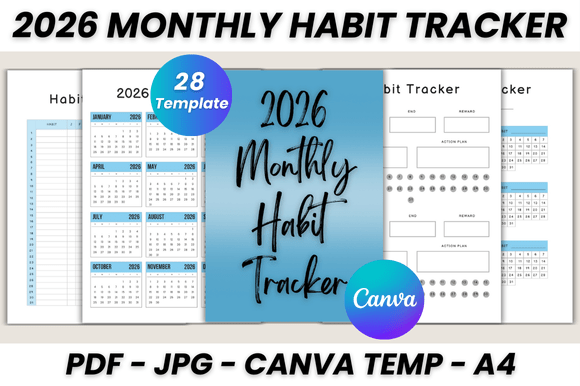
For designers, entrepreneurs, and creative professionals, the start of a new year is less about resolutions and more about systems. It is about building a visual framework that supports productivity, creativity, and brand consistency. The 2026 Monthly Habit Tracker Canva template is more than a simple planner; it is a comprehensive design asset built for those who appreciate the intersection of function and modern typography. This isn't just a checklist; it is a 28-page strategic tool designed to help you curate your year with the same precision you apply to your logo design or editorial design projects.
The Anatomy of a Professional Planning Template
When evaluating design assets, the difference between an amateur project and a professional tool often lies in the structure. This specific template package is engineered to cover every aspect of annual planning without leaving gaps in your workflow. It is not a static image; it is a fully editable ecosystem within Canva.
The package includes a dedicated Belongs To page, which serves as the digital cover for your planner. This is essential for brand identity, allowing you to stamp your ownership immediately. Following that, the 2026 Calendar provides a macro view of the year, which is vital for scheduling marketing campaigns, content drops, or product launches.
The core of the package lies in the 2026 Monthly Planner, spanning January through December. This section utilizes a clean sans serif font aesthetic that prioritizes readability over decorative flair. However, the true utility comes from the Habit Tracker section, which includes 10 different pages. This variety is crucial; habits change, and having multiple layouts ensures your system evolves with your goals. The inclusion of two Notes pages rounds out the utility, offering space for brainstorming and strategy sessions.
Visual Personality and Modern Typography
The visual style of the 2026 Monthly Habit Tracker Canva leans heavily into modern typography. It avoids the clutter of overly ornate script fonts or difficult-to-read handwritten fonts for the primary data entry areas. Instead, it uses a balanced hierarchy that guides the eye from the month header down to the daily tracking squares.
This approach reflects a growing trend in web design and packaging design: the demand for clarity. While a display font might be used sparingly for the title of a specific month to add a touch of personality, the body text relies on legibility. This makes the template suitable for both digital viewing on a tablet and physical printing on A4 paper. The visual personality is professional yet approachable—think of it as a premium font pairing system applied to productivity. It feels expensive and curated, yet it remains accessible to the average user.
Customization: Turning a Template into a Brand Asset
A template is only as good as its flexibility. One of the strongest arguments for using this specific 2026 Monthly Habit Tracker Canva is the depth of customization available. Because it is built in Canva, you are not locked into the original designer's color palette or font choices.
You can easily swap the existing sans serif font for a serif font if you are aiming for a more traditional, editorial vibe. Alternatively, you could introduce a creative font for the headers to better match a specific brand voice. For example, a boutique coffee shop owner might change the headers to a rustic script font, while a tech startup founder might stick with a geometric sans serif.
The ability to edit fonts, sizes, colors, and layout styles means you can treat this as a foundational typeface playground. You can upload your own photos or brand elements to the background, effectively turning a generic planner into a piece of social media graphics content or a branded internal document. This level of control ensures that the planner contributes to brand perception rather than clashing with it.
Strategic Applications for Entrepreneurs and Creators
How does a 2026 Monthly Habit Tracker Canva fit into a busy professional's life? The answer lies in visual hierarchy and habit stacking. As a designer or marketer, you likely juggle multiple projects. The 10 different habit tracker pages allow you to segment your life effectively.
You could dedicate one tracker specifically to "Content Creation," tracking daily posting schedules. Another could be dedicated to "Skill Development," such as learning a new font pairing technique or mastering a new software update. The editable files mean you can rename these categories to fit your specific niche.
Furthermore, the 2026 Monthly Planner section is perfect for high-level strategy. Instead of getting lost in the weeds of daily tasks, this section allows you to map out the "big rocks" of your month. When you print this out and place it on your desk, the consistent layout aids in recognition. Your brain learns where to look for specific information, reducing cognitive load and increasing efficiency. It is a practical application of how good typography and layout design directly influence readability and user engagement.
From Screen to Print: The Technical Workflow
The transition from digital file to physical product is often where design assets fail. However, this template is optimized for print. It comes in A4 size (8.3 x 11.7 inches), which is a standard dimension for home printers and print shops alike.
The workflow is straightforward, designed for the non-technical user as well as the pro. After purchasing, you receive a link to the editable Canva template. You make your changes—adjusting the font size, tweaking the colors, or adding logo design elements. Once satisfied, you download the file as a Print PDF. This ensures that the typeface outlines are preserved and the resolution is high enough for crisp text.
Additionally, the package includes JPG files as a bonus. This is particularly useful for content creators and marketers. You can use these JPGs as flat lays in your social media graphics to promote your planning process or to sell the concept of organization to your own audience. The versatility of having both print-ready PDFs and web-ready JPGs makes this a comprehensive digital asset.
Choosing the Right Visuals for Your 2026 Strategy
Selecting a planner is a subtle form of brand identity curation. If your brand is minimalist and modern, the default settings of this 2026 Monthly Habit Tracker Canva will likely appeal to you immediately. The clean lines and lack of clutter align with contemporary web design trends.
However, if your brand is more maximalist, the template serves as a skeleton. You can layer textures, use handwritten fonts for a personal touch, or incorporate bold color blocking. The key is that the structure—the grid system and the spacing—is already professionally balanced. You are adding the "skin" to a well-built "skeleton."
For small business owners, consistency is king. Using a unified system for 2026 ensures that your internal planning documents look as polished as your external client decks. It signals to your team (or to yourself) that you value organization and aesthetics equally. Whether you are a blogger tracking post ideas or an entrepreneur tracking revenue goals, this system provides the framework you need to execute with precision.